Design Like It Won't Last.
Published on
Reading Time
4 mins
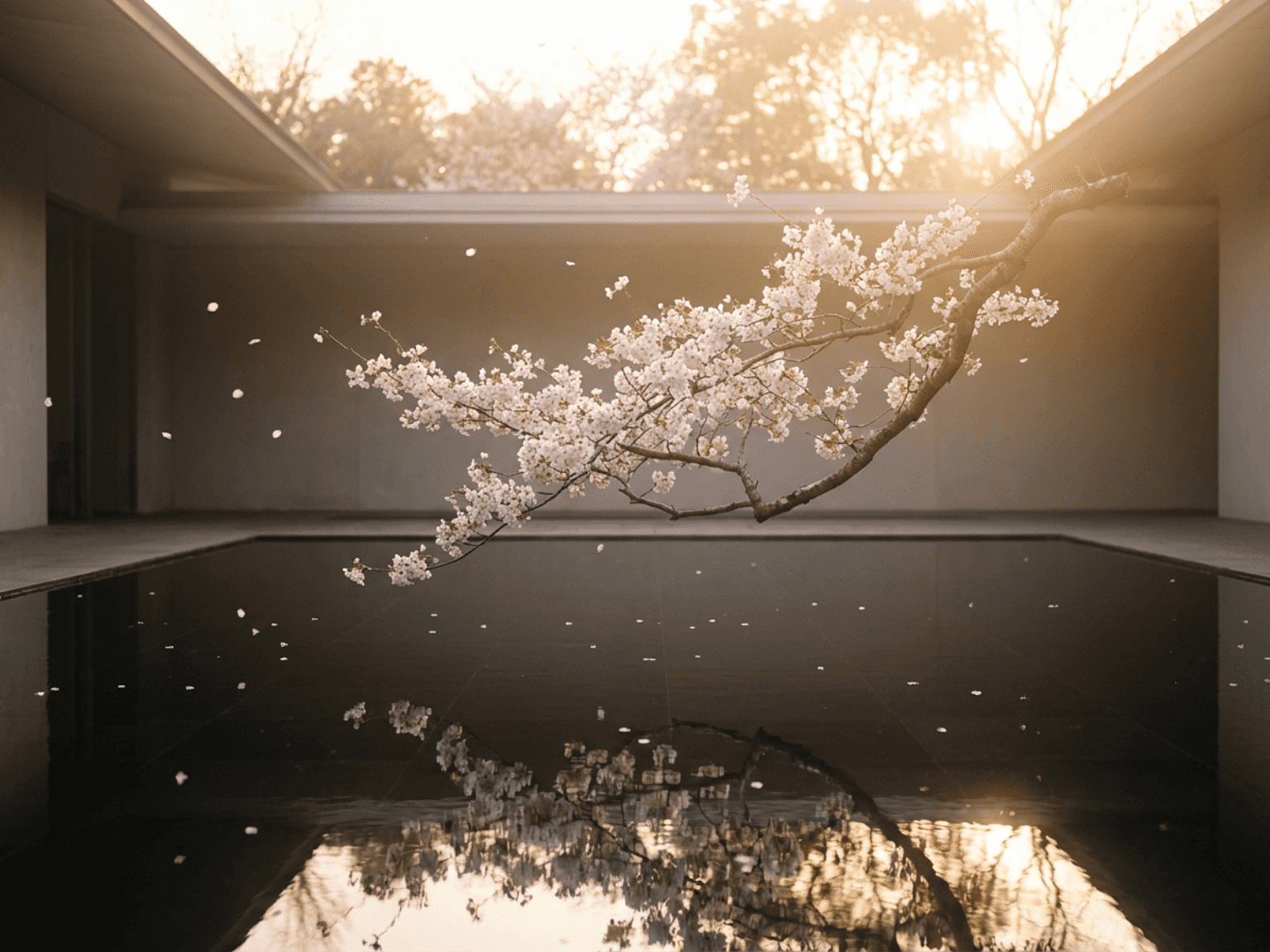
There is a temple in Kyoto - Ryōan-ji - where fifteen stones sit in raked gravel and have sat that way for five hundred years. No one agrees on what it means. That ambiguity is not a failure of design. It is the entire point. The garden was never meant to be understood. It was meant to be sat with.
The design industry would have A/B tested it by Tuesday.
We live in an era of design systems built for permanence - scalable, versioned, documented, archived. Every component library is a small act of defiance against time. Every rebrand is a negotiation with entropy. And somewhere in the background, AI is generating ten thousand variations of a button we'll obsess over for a week and forget in six months.
Three ancient philosophies have been quietly watching this happen. They would like a word.
Japanese aesthetic
Beauty found in imperfection, incompleteness, and the passage of time. The cracked glaze. The asymmetric bowl. The moss growing where it wasn't planned.
Buddhist doctrine
The first mark of existence: impermanence. Not as loss, but as the fundamental nature of all things. Everything that arises will pass. Without exception.
Japanese philosophy
The bittersweet pathos of things. The ache of cherry blossoms falling precisely because they fall. Transience not mourned, but tenderly witnessed.
The Permanence Delusion
Here is the belief that runs quietly beneath every design career: that good work endures. That if the system is solid enough, the thinking rigorous enough, the documentation thorough enough - something will last. A legacy. A body of work that outlives the Figma file.
It's a beautiful belief. It is also, according to roughly two and a half millennia of Eastern philosophy, a root cause of suffering.
The Buddhist concept of anicca doesn't ask you to be nihilistic about this. It asks you to be honest. The app will be deprecated. The design system will be forked and abandoned. The company will pivot. The brand will rebrand. The interface that felt revolutionary in 2022 will feel dated by 2026 - and it does, doesn't it.
Mono no aware, paraphrased
The question is not whether your work will last. It won't. The question is what kind of designer you become when you truly accept that - and what that acceptance frees you to make.
What Wabi-Sabi Knows About Your Design System
Wabi-sabi is not a style. This is the most commonly misunderstood thing about it. It is not about making things look weathered or adding grain textures to your mockups. It is a philosophical stance toward imperfection - one that finds the unfinished, the asymmetric, and the decaying not lesser than the polished, but truer.
Now consider what the design industry currently does with imperfection. We sand it off. We version it out. We run it through accessibility checks, stakeholder reviews, and iteration cycles until the rough edges that made the thing feel made - feel human - have been optimised away into something that could have been generated by a prompt.
And increasingly, it is.
The unresearched question: There are no design frameworks built around intentional incompleteness as a feature — not as a beta label, but as a philosophical commitment to leaving space for the user's own meaning-making. Wabi-sabi as UX methodology has never been seriously proposed. In 2026, it probably should be.

AI, Entropy, and the Gift of Impermanence
Here is where the it gets hopeful. Bear with it.
AI is, among other things, an entropy accelerant. The design cycle that used to take weeks now takes hours. Trends that used to last years now last months. Interfaces iterate faster than users can form attachment to them. The half-life of any design decision is collapsing toward zero.
The design industry's instinct is to resist this - to hold the line on quality, on craft, on systems thinking. That instinct is correct and worth protecting.
But there is another reading. AI's acceleration of impermanence might be the forced confrontation with anicca that design has been avoiding for decades. The industry that built its identity on enduring systems is being handed an environment where nothing endures. And instead of grieving that, what if we built from it?
What if, alongside every design specification, there was an Ephemeral Design Intent, a documented acknowledgment of the work's expected lifespan, its planned obsolescence, and what it is designed to leave behind when it's gone?
Not a deprecation schedule. Something more philosophical. A statement of what the design intends to have meant - to the user, to the environment, to the culture - in the window it exists.
EDI would reorient design away from the permanence delusion and toward intentional transience. A product designed to be used deeply for two years and then composted gracefully is not a failure. It is wabi-sabi made digital. It is mono no aware applied to an interface. It is, possibly, the most honest thing a designer can make in an era of AI-accelerated obsolescence.
The sustainability implication is direct: designing for impermanence means designing against accumulation. Less bloat. Less legacy code kept alive by institutional inertia. Fewer features that exist because removing them feels like admitting defeat. The Buddhist path and the green path turn out to be the same path.
The Liberation That's Been There All Along
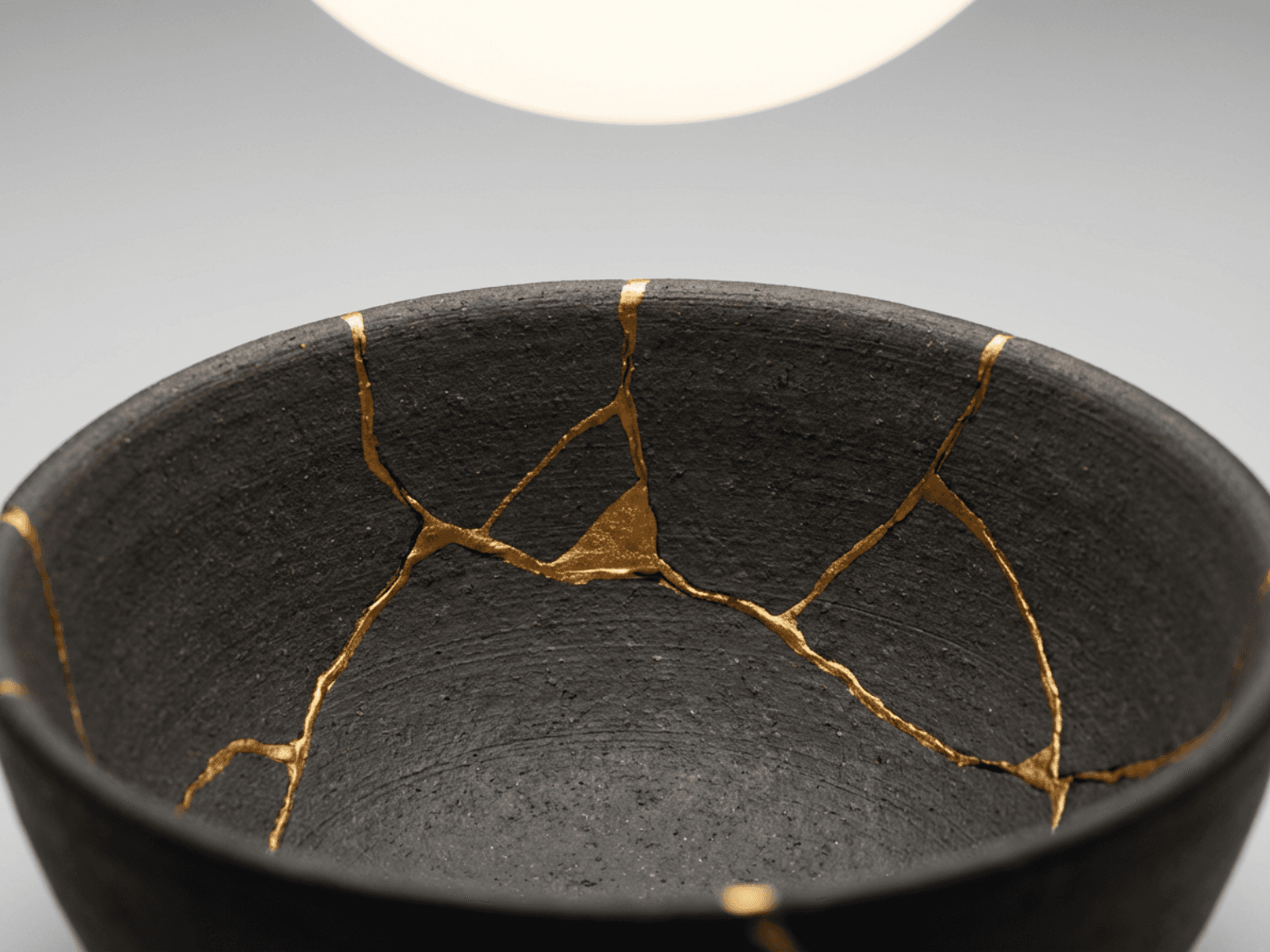
There is a Japanese practice called kintsugi - the art of repairing broken pottery with gold. The crack is not hidden. It is highlighted. The breakage becomes the most beautiful part of the object, because it is the most honest. It is the part that shows the thing has lived.
The design industry has been taught to treat its cracks as failures - to patch them invisibly, to release only when polished, to let nothing show that might reveal the making. But the making is the whole point. The seams are the story. The impermanence is the meaning.
What Eastern philosophy offers the AI-era designer is not a retreat from technology or a romanticisation of the handmade. It offers something far more useful: a way to work without clinging. To make things fully, beautifully, intentionally - and then release them without grief when they are done.
That is not resignation. That is the most radical creative act available to a designer in 2026. To build something that knows what it is, knows how long it will last, and blooms fully anyway.
This article draws on wabi-sabi aesthetics (Sen no Rikyū, 16th c.), the Buddhist doctrine of anicca from the Pali Canon, and Motoori Norinaga's articulation of mono no aware (18th c.) — three frameworks built for a world of passing things, applied to an industry still learning how to let go.