The Quiet Grief of Designing for AI
Published on
Reading Time
4 mins
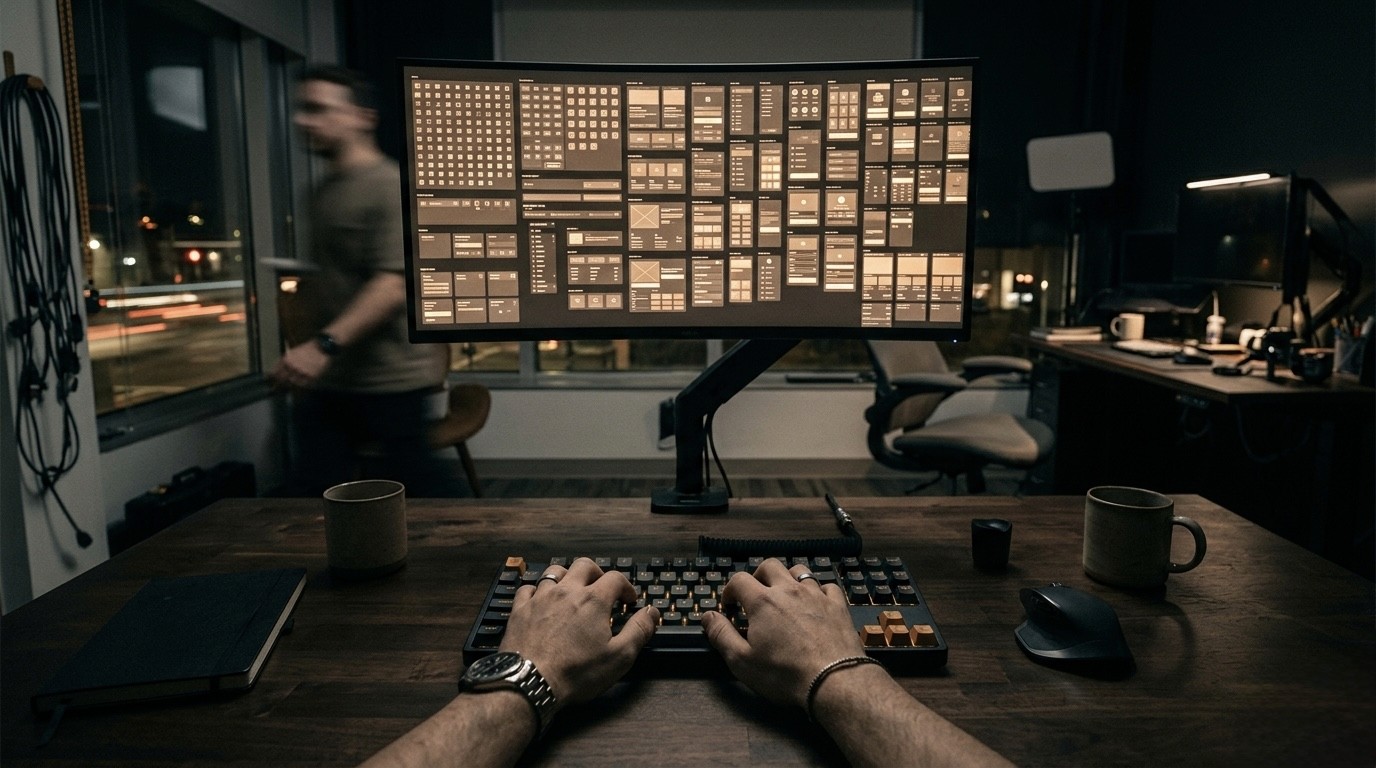
There's a specific kind of exhaustion that hits around the third AI-generated component review of the day. It isn't burnout, exactly. It's something quieter, stranger - like being a chef who now mostly reheats meals someone else cooked and is asked to call it cuisine.
Welcome to the psychological condition nobody in the design industry has named yet. We've spent years talking about sustainable design - dark patterns, digital waste, algorithmic manipulation. But there's a new crisis brewing in the margins of our Figma files, and it smells like a GPU farm running at full capacity.
The Planet Has a Render Problem
Let's start with the unsexy truth: every AI-assisted prototype you generate, every "make it pop" text you feed into a design tool, every auto-generated user flow that you'll review, tweak 4%, and ship - it burns energy. Real, physical, smokestack-adjacent energy.
~1L
water consumed per~20 AI prompts
10x
more energy thana Google search
2030
AI projected todouble data center emissions
UX designers - the very people whose job is to reduce friction, reduce noise, reduce waste - are now quietly among the highest-frequency consumers of AI compute. We iterate obsessively. We generate variations. We run tests. And we do it dozens of times before lunch.
The New Guilt is Invisible
Here's the psychological twist that nobody's researching: unlike a plastic straw or a petrol receipt, the environmental cost of design work in the AI era is completely invisible. You can't see the datacentre. You don't hear the cooling fans. There's no exhaust.
Psychologists have a term for this - moral disengagement through abstraction. When harm is invisible, humans are remarkably, depressingly good at not feeling it. And the design industry, a field that prides itself on empathy, is not immune.
Instead, what designers feel is something stranger: a creeping sense of creative irrelevance laced with overproduction anxiety. The tools are faster than thought. The outputs are endless. The feeling that you should be doing more - generating more, testing more, validating more - never quite switches off.
Uncharted territory: There are currently zero peer-reviewed studies on the specific psychological impact of AI-assisted overgeneration on UI/UX practitioners. Zero studies on design decision fatigue caused by prompt abundance. This is, somehow, still a blank page in 2026.
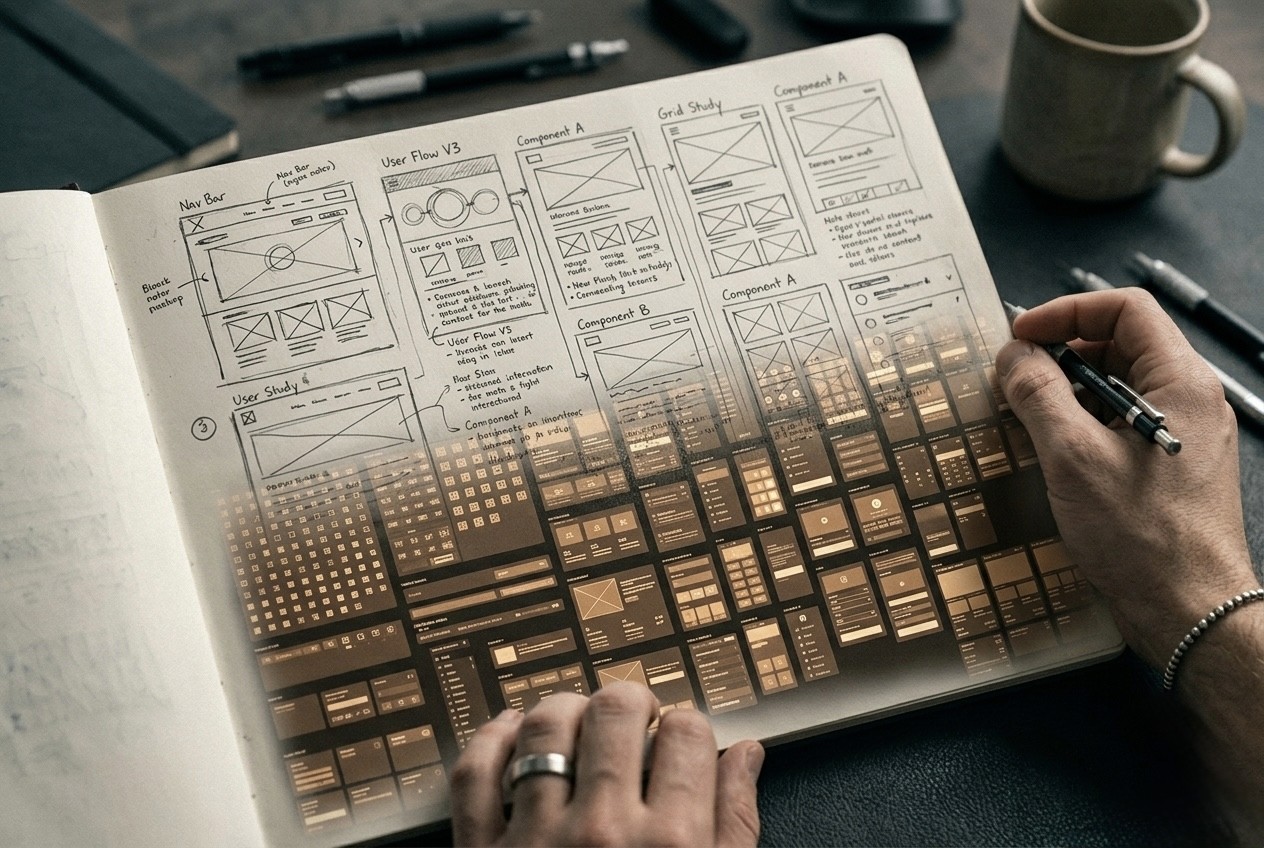

Introducing: Prompt Paralysis Disorder
Here's the bizarre concept nobody has touched yet. Call it Prompt Paralysis Disorder (PPD) - a cognitive state unique to AI-era designers, characterised by three simultaneous experiences:
1. Infinity vertigo. When any variation is possible in three seconds, choosing one feels meaningless. The designer who once agonised over two typeface options now stares at 40 generated layouts, feeling nothing.
2. Authorship grief. A low-grade mourning for the work that used to feel made - by hand, by decision, by intention. Not nostalgia exactly. More like phantom limb syndrome, but for creative ownership.
3. Green cognitive dissonance. The designer who attends climate talks and adds eco-friendly copy to apps simultaneously runs 200 AI generations per sprint without a second thought. The gap between values and behaviour quietly widens.
What if every design tool had a live Ecological Intentionality Score - a metric that tracked not just how many AI calls you made, but whether each one was deliberate, purposeful, and resolved?
An abandoned generation: −2 EIS. A prompt that replaced five previous iterations with one cleaner decision: +4 EIS. A week of high-intent, low-waste design work: a green badge on your portfolio.
This isn't about guilt. It's about surfacing something invisible so that designers - people who are literally trained to care about impact - can actually see theirs. The EIS doesn't exist yet. It probably should.
Where Do We Actually Stand?
Honestly? Uncomfortably at a crossroads. The design industry has spent a decade building ethical frameworks for dark patterns, accessibility, and inclusive research. We are, as a field, capable of extraordinary moral clarity - when the harm is visible.
The AI era is testing whether that moral clarity can operate in the dark. Whether we can hold sustainability as a value not just in the products we design, but in the process of designing them. Whether how we work can be as conscious as what we make.
The grief of designing for AI is real. The invisible cost is real. And the very fact that we feel vaguely weird about it - that nagging, unnamed discomfort at the end of a 40-iteration sprint - might be the most important design signal we're not yet listening to.
That's not a feature request. That's a design philosophy. And it's one the field is quietly, urgently ready for - even if it hasn't found the words yet.