DISCOVER PROJECT
Panago Pizza
Driver Delivery App
Redesigning the road ahead - one delivery at a time.
Feb 2024
— Drivers don't just want another app. They want a co-pilot that's fast, clear, and invisible when it needs to be. This is the story of how listening to the people behind the wheel built a better delivery experience from the ground up.
Scope
UX Research · Interviews · User Persona · Journey Mapping · UI Design · Testing & Iteration

Project Overview
The objective was simple on paper: redesign a delivery driver app for Panago Pizza, one of Canada's leading pizza chains. In reality? It meant earning the trust of drivers who had learned to work around broken tools - and building something that finally worked with them.
Panago's drivers are the last touchpoint in the customer experience - and the existing app was making their hardest moments harder. Juggling multiple orders, decoding unclear statuses, and losing time to slow logins meant drivers were carrying more mental load than they should. This project set out to change that by designing an enterprise operations tool that felt less like enterprise software and more like a reliable teammate.
The work began not with wireframes, but with conversation - sitting with real drivers, hearing their daily frustrations, and mapping the gaps between what the current tool offered and what drivers actually needed on the road.
Approach
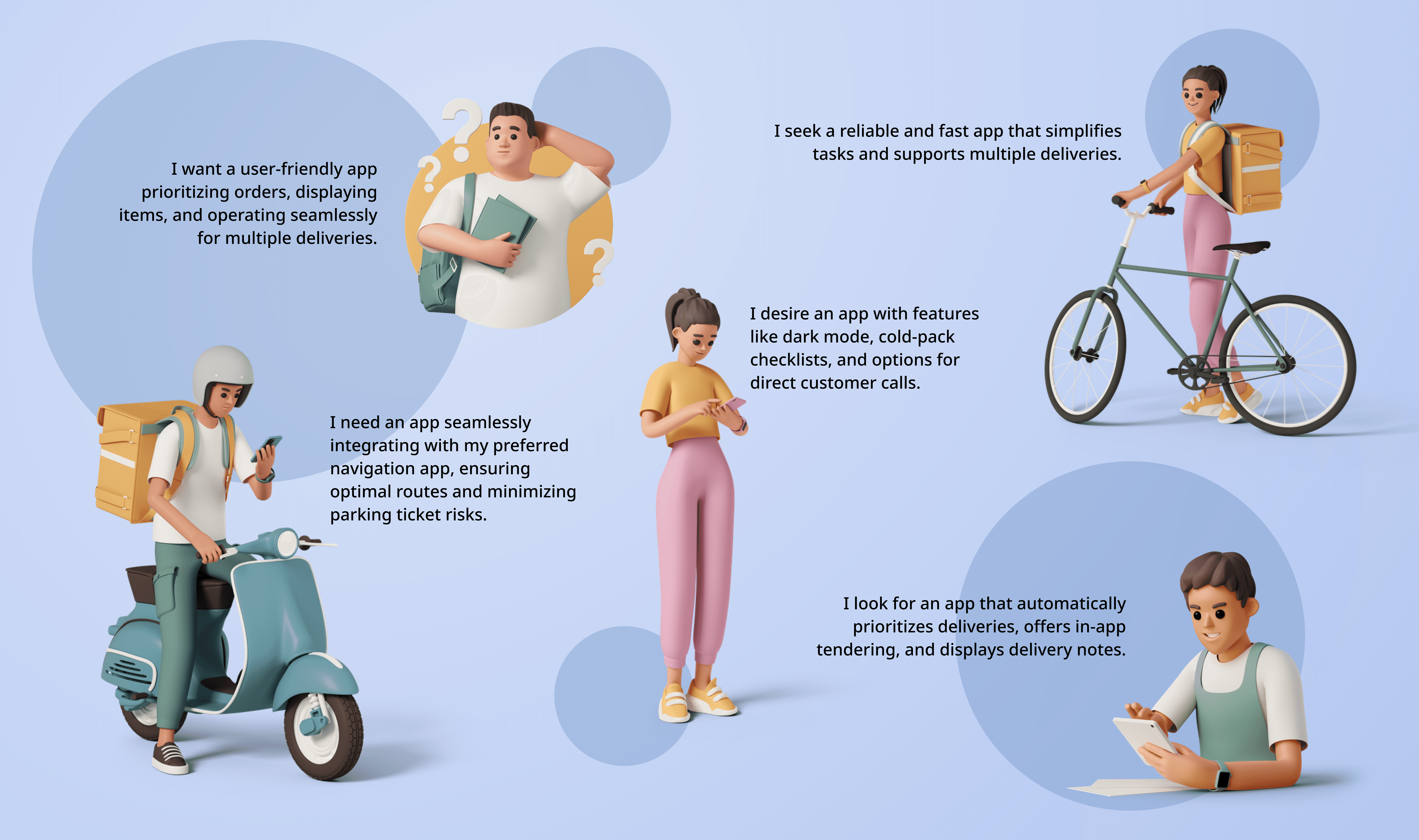
Listening first. Designing second.
I approached this not as a product redesign, but as a trust problem. Drivers had already learned to distrust their tools, so the design had to earn its place in their workflow before asking anything of them.
Every decision was filtered through one question: would a driver feel this while they're moving? That meant ruthlessly cutting anything that required reading, scrolling, or decision-making mid-route. I anchored the process in behavioral observation over assumption - mapping not just what drivers said they wanted in interviews, but what their frustrations revealed they actually needed. The gap between those two things became the design brief.
Process
I started where every good design should: the people using it. Through driver interviews, I collected raw, honest input - stories about parking ticket stress, juggling multiple orders with no smart prioritization, and a login flow that ate precious minutes before a shift even began. From those conversations, Ethan emerged - a 7-year veteran driver who's organized, tech-savvy, and zero-tolerance for wasted time - giving the design a human north star to return to at every decision point.
With research grounded, I mapped two critical task flows - getting ready for the road, and completing a delivery end-to-end - then translated those into a clean information architecture. Wireframes validated the structure before a single pixel of UI was touched, ensuring the logic was sound before the visuals followed.


Drivers don't need more features. They need fewer decisions.
Final Design
This isn't just a prettier app. It's a fundamentally more humane one - built around the reality of a driver's day, not a product manager's assumption of it.
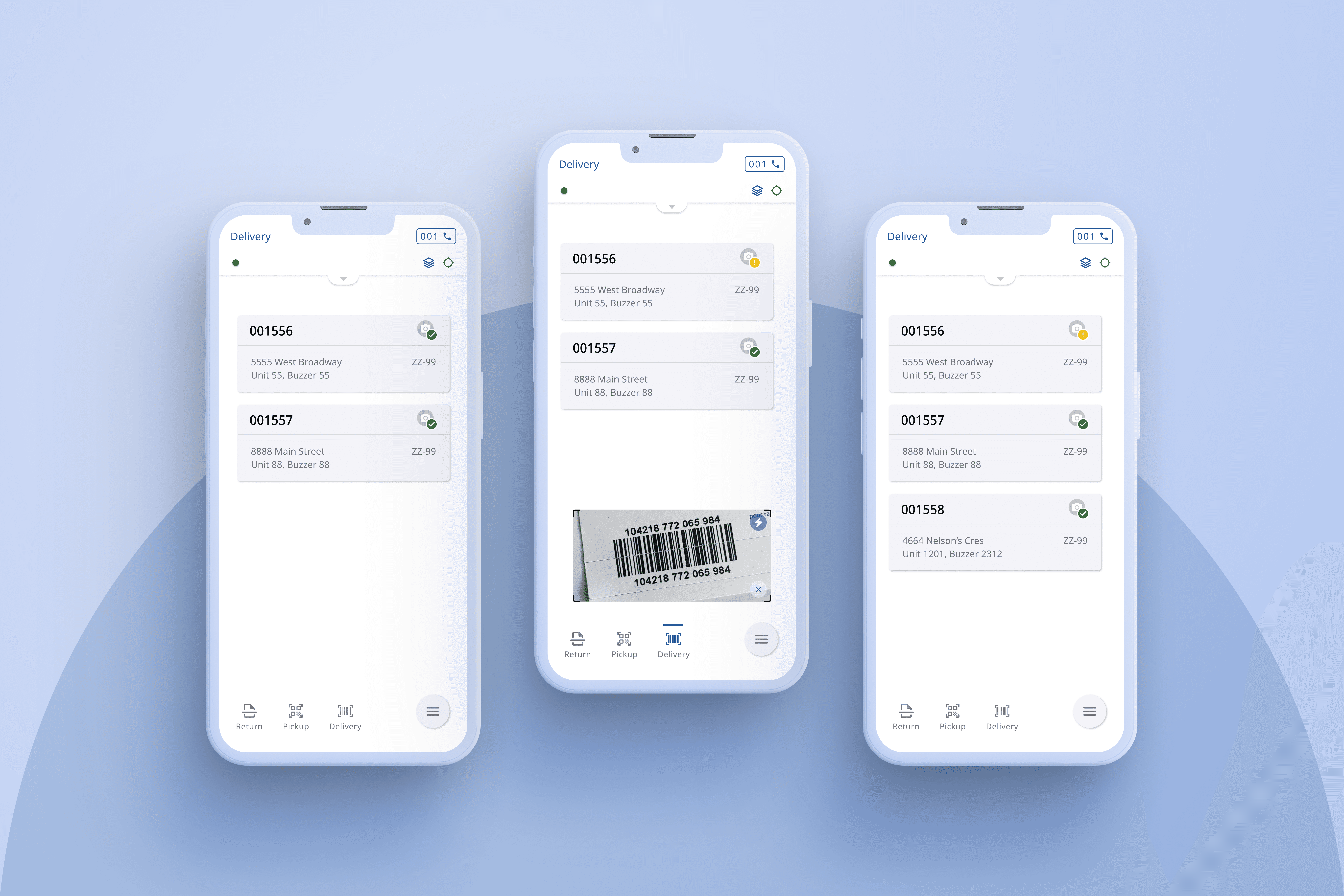
The final design centers around a clean delivery homepage where a driver's status - on duty, in queue, dispatched, en route - is always visible at a glance. Barcode scanning for order assignment replaces manual entry. Smart order prioritization surfaces what matters first. GPS integration alerts drivers when they're near a destination. And a quick-access store contact means help is always one tap away.
Product Images


"When every second on the road counts, the app in your pocket can't afford to waste one." — Trisha
Impact & Learnings
Designing for employees - not end customers - demanded a different kind of empathy. The edge cases weren't edge cases at all. GPS failures, offline scenarios, and multi-delivery management weren't exceptions to design for; they were the entire point.
This project confirmed something I believe deeply: the best enterprise design is invisible. When a tool works the way a user already thinks, they stop noticing the interface and start trusting the outcome.
Panago's Driver App taught me that operational tools carry the highest UX stakes - because real jobs depend on them working. Balancing business rules with in-the-moment human needs, designing for connectivity failures, and building a system that scales across dozens of daily edge cases: that's where the real craft lives.
Pain Points Addressed
Clarity Improved