DISCOVER PROJECT
Panago Pizza
Panago Design System
From chaos to a system six products can rely on
2023 - Ongoing
— When I stepped into Panago Pizza as their sole UI/UX Designer, I inherited two Figma files and a question worth asking out loud: was this even a design system? Two years later, it covers six enterprise products across 100+ pages, and it's still growing.
Scope
Sole UI/UX Designer


Project Overview
Two Figma files, no conventions, and six products on the roadmap - the system had to be built while the work kept moving.
Panago Pizza is an established brand - corporate, sophisticated, and operating at scale. Internally, the product team manages a suite of enterprise tools that span store operations, logistics, customer data, and ordering. What they didn't have was a design system that could support that kind of complexity.
The original Figma workspace was technically usable, if you already knew where everything was. For anyone else, it was a dead end. Two large, unmaintained files held an evolving collection of screens and components with no shared logic connecting them. Colors, spacing, and type were hardcoded inconsistently. Components were duplicated, detached, or simply undocumented. As the product roadmap expanded and new tools entered the pipeline, the problem compounded. Every new project started from scratch because there was no reliable foundation to build on. The design system wasn't scaling; it was accumulating.
Approach
Audit. Restructure. Build forward.
With no dedicated design ops support and a full product roadmap to deliver alongside system work, I had to be strategic. I couldn't rebuild everything before starting - the business wasn't waiting. So I approached the design system as a living infrastructure project: fix what's broken while building what's missing, and document as you go.
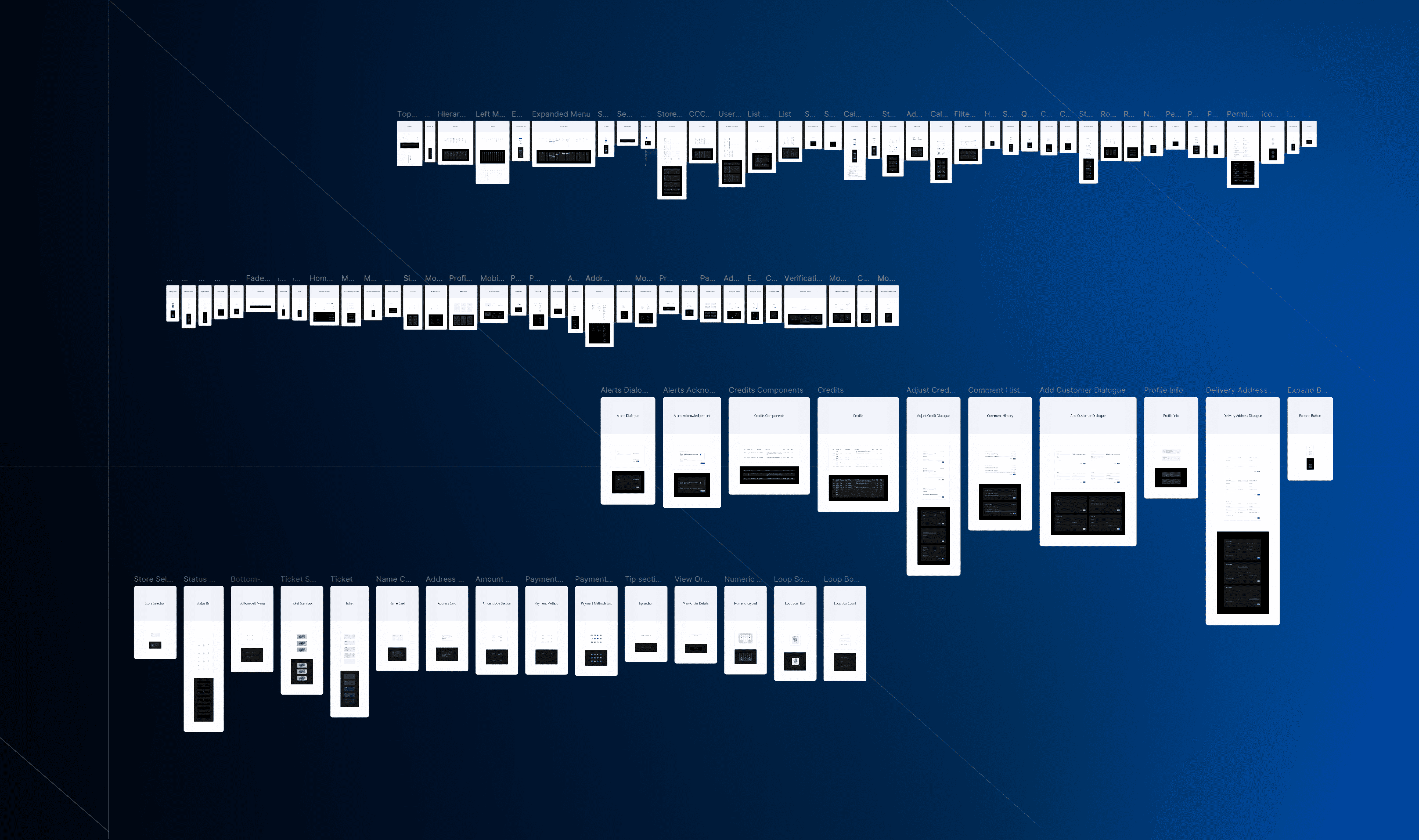
With a full product roadmap to deliver alongside system work and no design ops support, I had to build while shipping. I broke the two giant files into a structured multi-file workspace - organized by product, each with a thumbnail and clear label - then introduced naming conventions, auto layout standards, and component documentation progressively, applied to new work immediately, and backfilled as capacity allowed. On the brand side, Panago's enterprise culture leaned strictly corporate - playful graphics. I pushed back with a rationale grounded in usability: people process and retain visuals faster than text. That advocacy landed, and a considered graphics layer became part of the system - functional, not decorative, and distinctly Panago.
System
Six products. One shared language. - Driver Delivery App - Store Maintenance - Customer Management - Product Management - Trade Area Management - Order System
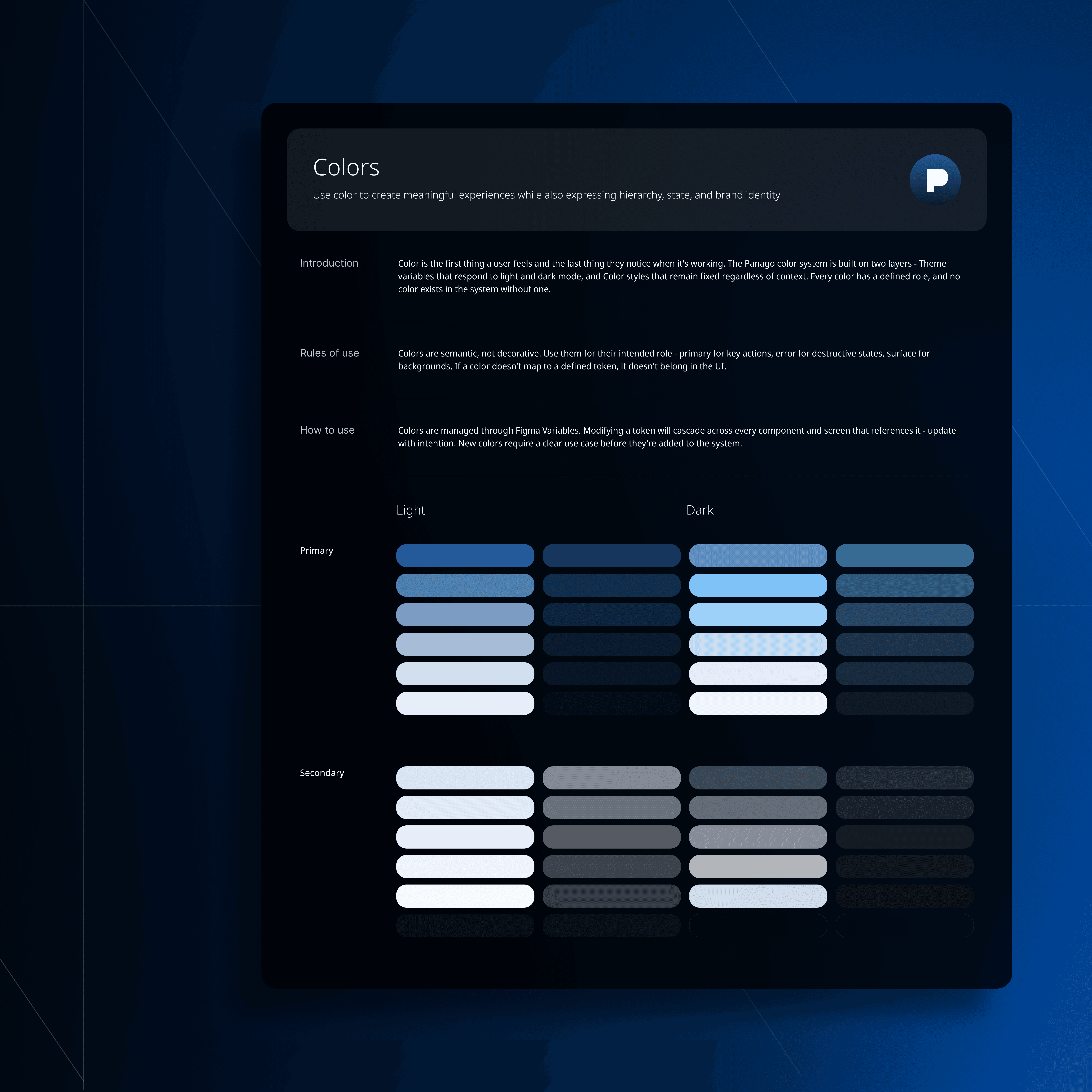
The design system now serves as the single source of truth for a suite of internal and customer-facing enterprise products. Each product has its own file and page structure within the workspace, while shared foundations - color, typography, iconography, and components - live in a centralized library all products inherit from. Each product surfaces different user needs and interaction patterns - from field-facing mobile workflows for drivers, to data-dense management dashboards for operations teams. The design system holds the foundations and components that make these products feel coherent without making them feel identical.


"Consistency, structure, scalability. Every decision was made with one goal: give every product a foundation worth building on."
Impact
What a system actually changes.
Design system work rarely produces a single dramatic before-and-after moment. Its value compounds over time - in the decisions that don't need to be revisited, the screens that come together faster, and the contributors who can work confidently without a guide. The restructured workspace made an immediate difference beyond design - developers and project managers could navigate Figma independently, reducing back-and-forth and speeding up handoff. Each new product inherited a foundation rather than starting from scratch, and six distinct tools began reading as one coherent system. A brand that once resisted anything beyond corporate utility now carries a graphics layer that makes complex interfaces faster to read and easier to use.
Product Images


"A design system is only as good as the chaos it replaces." — Trisha
What's Next
A system is never finished.
The design system at Panago is a living document, deliberately so.
The immediate priority is completing the token migration: moving the existing color styles into Figma Variables so that theme changes propagate across all six products simultaneously. Alongside that, component documentation continues to grow as new products enter the pipeline, and patterns for more complex enterprise workflows are being defined and standardized. The goal isn't a perfect system frozen in time. It's a reliable one that a growing team and an evolving product suite can depend on.
Reusability Gained
System Coverage